Growing a Discord server is one of the most rewarding and frustrating things you can do online. Rewarding because a thriving community is genuinely valuable to its members. Frustrating because growth is slow, unpredictable, and full of plateaus that make you wonder if anyone will ever join.
This guide is the real deal. No "just post your invite link on Reddit" advice. We're covering the systematic, sustainable strategies that actually grow Discord servers in 2026, from zero members to thousands.
Phase 1: Foundation (Before You Promote Anything)
The biggest mistake server owners make is promoting too early. If your server isn't ready for new members, every person who joins and sees an empty, disorganized space will leave and never come back. First impressions are permanent. Before you invite anyone publicly, you need to define your server's identity by answering what it's about, who it's for, and why someone should join yours instead of hundreds of others. Build the infrastructure with essential channels like welcome, introductions, general discussion, off-topic, and announcements, plus a verification system and clear moderation setup. Then seed the community by inviting ten to twenty trusted people who understand your purpose, start conversations in main channels, post resources that demonstrate value, and run at least one event so new members see the server is alive. This foundation work determines whether new members stay or leave immediately.
Define Your Server's Identity
Before anything else, answer three questions:
-
What is this server about? Be specific. "Gaming" is too broad. "Competitive Valorant for Diamond+ players" is a community. "Indie game development for solo developers" is a community. "Gaming" is a category.
-
Who is this for? Define your ideal member. Age range, interests, skill level, personality type. The more specific you are, the easier it is to attract the right people.
-
Why should someone join THIS server instead of the hundreds of others? This is your unique value proposition. Maybe it's your moderation philosophy, your event schedule, your specific niche, or the quality of your existing members.
Build the Infrastructure
Your server needs to be organized, welcoming, and functional before anyone sees it:
Essential channels:
- Welcome/rules channel with clear, concise guidelines
- Introduction channel where new members can say hello
- General discussion for your main topic
- Off-topic for everything else
- Announcements for important updates
- 2-3 topic-specific channels (don't over-create; add channels as demand grows)
Essential systems:
- Verification or onboarding flow (even a simple reaction role)
- Moderation setup (automod, logging, clear rule enforcement)
- Role system for identifying member interests or skill levels
For a detailed setup guide, see our Discord Server Templates guide.
Seed the Community
An empty server kills growth. Before you invite anyone publicly:
- Invite 10-20 friends or trusted people who understand the server's purpose
- Start conversations in the main channels so new members see activity
- Post resources, links, or content that demonstrates the server's value
- Run at least one event so there's evidence the server is alive
This seed group is critical. They set the tone, establish the culture, and make the server feel alive when new members trickle in.
Phase 2: Organic Growth Strategies
Optimize Your Server for Discovery
Server listing platforms are one of the most consistent sources of new members. To maximize your visibility:
Write a compelling description. Your server description is an ad. It should clearly state:
- What the server is about
- Who it's for
- What makes it special
- What members can expect
Use relevant tags. Tags help people find your server when browsing by interest. Choose tags that accurately represent your community. You can browse popular tags on server listing platforms to see what categories get the most traffic.
Keep your server icon professional. A custom icon that represents your community makes you look established. Default Discord icons suggest the server isn't maintained.
Maintain activity. Most discovery platforms factor activity into rankings. A server with 500 members and 100 daily messages will rank higher than one with 5,000 members and 10 daily messages.
Content Marketing
Creating content related to your server's topic is one of the most powerful long-term growth strategies:
- Write blog posts or guides related to your community's focus (you can share these on social media and forums)
- Create YouTube videos or TikToks about your server's topic, mentioning the community at the end
- Start a podcast interviewing community members or discussing topics your community cares about
- Share resources (tier lists, guides, templates, tools) that your target audience would find valuable
The key is that the content provides value independently. It's not an ad for your server; it's useful content that happens to come from your community.
Social Media Presence
Different platforms attract different types of members:
- Twitter/X -- Good for tech, gaming, and niche communities. Share insights, engage in conversations, and include your server link in your bio
- Reddit -- Post genuinely helpful content in relevant subreddits. Don't spam your invite link; be a valuable member of the subreddit first
- TikTok and YouTube Shorts -- Short-form video content about your server's topic can go viral and drive significant traffic
- Instagram -- Visual communities (art, photography, design) do well here
- Threads -- Growing platform for community discovery
Rules for social media promotion:
- Provide value first, promote second
- Don't spam invite links in places that don't welcome them
- Be an active member of the communities you're promoting in
- Show the community in action (screenshots of great conversations, event recaps) rather than just saying "join my server"
Cross-Promotion with Other Servers
Partnering with complementary (not competing) servers is a win-win:
- A Python server and a data science server share overlapping audiences
- A gaming community and a game development server complement each other
- A music production server and a music theory server serve similar people
How to approach partnerships:
- Join the other server and become a genuine member
- Build a relationship with the server owner or staff
- Propose a mutual partnership with clear terms
- Create a partnerships channel and feature each other
SEO for Discord Servers
Yes, SEO applies to Discord servers. When people search for "best [topic] Discord server," you want to appear:
- List your server on multiple discovery platforms
- Use relevant keywords in your server name and description
- Maintain consistent branding across all listings
- Encourage reviews and upvotes where platforms support them
- If you have a website or social media, link to your server with relevant anchor text
Leverage Events
Events are both a retention tool and a growth tool:
- Promote events outside the server (social media, forums, other communities)
- Make some events open to non-members to give people a taste of the community
- Recap events publicly to show potential members what they're missing
- Collaborate with other servers or creators on events for cross-exposure
For event ideas, check our 25 Discord Event Ideas guide.
Phase 3: Retention (The Growth Nobody Talks About)
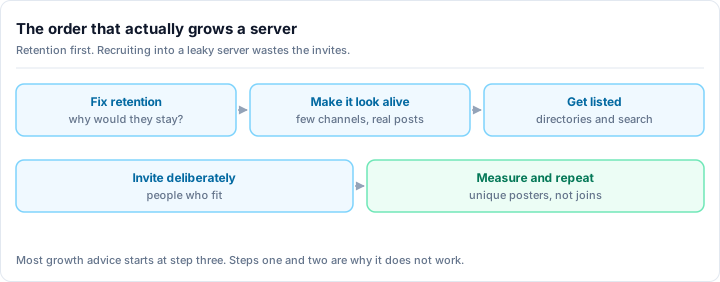
Here's the secret most growth guides won't tell you: retention is growth. A server that retains 80% of new members grows faster than one that attracts twice as many but retains only 20%.
First 48 Hours Are Critical
When someone joins your server, you have roughly 48 hours before they either become a member or become a statistic. During this window:
- Welcome them personally (or have a bot that does a convincingly warm job)
- Guide them to relevant channels based on their interests
- Introduce them to existing members who share their interests
- Invite them to an upcoming event or ongoing activity
- Make sure they have at least one positive interaction before they leave for the day
Create Habits
Members who develop habits around your server stick around:
- Daily events or prompts give members a reason to check in every day
- Weekly events create anticipation and routine
- Role progression systems where activity unlocks perks
- Recognition for regular contributors (member of the week, leaderboards, shoutouts)
Build Relationships, Not Just Channels
People don't stay in servers because the channels are well-organized. They stay because they've made friends. Facilitate this by:
- Encouraging voice channel hangouts
- Running small-group events where people can actually get to know each other
- Creating interest-based sub-groups within the server
- Celebrating member milestones (join anniversaries, achievements)
Listen and Adapt
Your community will tell you what it needs if you listen:
- Create a suggestions channel and actually implement good ideas
- Run periodic surveys about what members want
- Pay attention to what channels are active and which are dead
- Ask members why they're leaving when they do (an exit survey bot can help)
For more retention strategies, check our 15 Discord Engagement Tips.
Phase 4: Scaling
Once you're past the early stages and seeing consistent growth, new challenges emerge.
Moderation Scales with Community
More members means more moderation needs. Don't wait until you're drowning:
- Recruit moderators from your most active, trusted members
- Create clear moderation guidelines so decisions are consistent
- Use automod tools for obvious violations (spam, slurs, etc.)
- Have a process for handling disputes and appeals
- Review moderation policies regularly
Our complete moderation guide covers this in depth.
Don't Over-Channel
Resist the urge to create channels for every possible topic. Too many channels dilutes activity:
- Better: 5 active channels than 20 dead ones
- Rule of thumb: Only create a new channel when an existing one consistently has off-topic conversations about the same subject
- Archive channels that go quiet instead of deleting them
- Use threads for temporary discussions instead of permanent channels
Maintain Culture Through Growth
The culture that makes your server special can erode as you scale if you're not intentional:
- Document your community values and refer to them regularly
- New members should understand the culture through experience, not just rules
- Empower long-time members as cultural ambassadors
- Address cultural drift early; it's harder to fix later
Delegate and Build a Team
You can't run a growing server alone:
- Moderators for rule enforcement and conflict resolution
- Event coordinators for planning and running community events
- Content creators who keep channels active with discussions and resources
- Community managers who welcome new members and facilitate connections
- Technical administrators who manage bots, roles, and server settings
Common Growth Mistakes
Buying Members or Using "Member Boost" Services
These services add fake accounts or incentivized joins. The "members" never participate, inflating your count while making the server look dead. Worse, Discord can flag your server for suspicious activity.
Growing Too Fast
Rapid growth without adequate moderation and infrastructure leads to cultural collapse. It's better to grow steadily at a pace you can manage than to go viral and watch your community implode under its own weight.
Ignoring Existing Members to Chase New Ones
Your current members are your greatest asset. They're the reason new people stay. If you neglect them while chasing growth, you'll lose the foundation your community is built on.
Copying What Worked for Others
What worked for a gaming server with a popular Twitch streamer won't work for a small art community. Your growth strategy should match your specific community, audience, and resources.
Giving Up Too Early
Server growth follows a curve that looks like nothing, nothing, nothing, something, more, snowball. The early days are the hardest. Most successful servers spent months (or years) in the "nothing" phase before reaching critical mass.
Growth Metrics That Actually Matter
Forget total member count. These metrics tell you whether your server is actually growing in a meaningful way:
- Daily active users -- How many unique members participate each day?
- Messages per day -- Is conversation actually happening?
- New member retention -- What percentage of joins are still active after 1 week? 1 month?
- Voice channel usage -- Are people spending time in voice?
- Event participation -- Are members showing up for events?
- Returning members -- Are people coming back day after day?
A server with 200 highly active members is more alive than one with 10,000 ghosts.
Final Thoughts
Growing a Discord server is a marathon, not a sprint. The most successful communities are built by people who genuinely care about the topic and the members, not people chasing numbers. Focus on creating genuine value, building real relationships, and being patient. The members will come.
If you're just getting started, our guide on how to create a thriving Discord community covers the foundational steps, and our guide on getting more members has additional tactical advice.